Viscose: Feel, Drape & Versatility
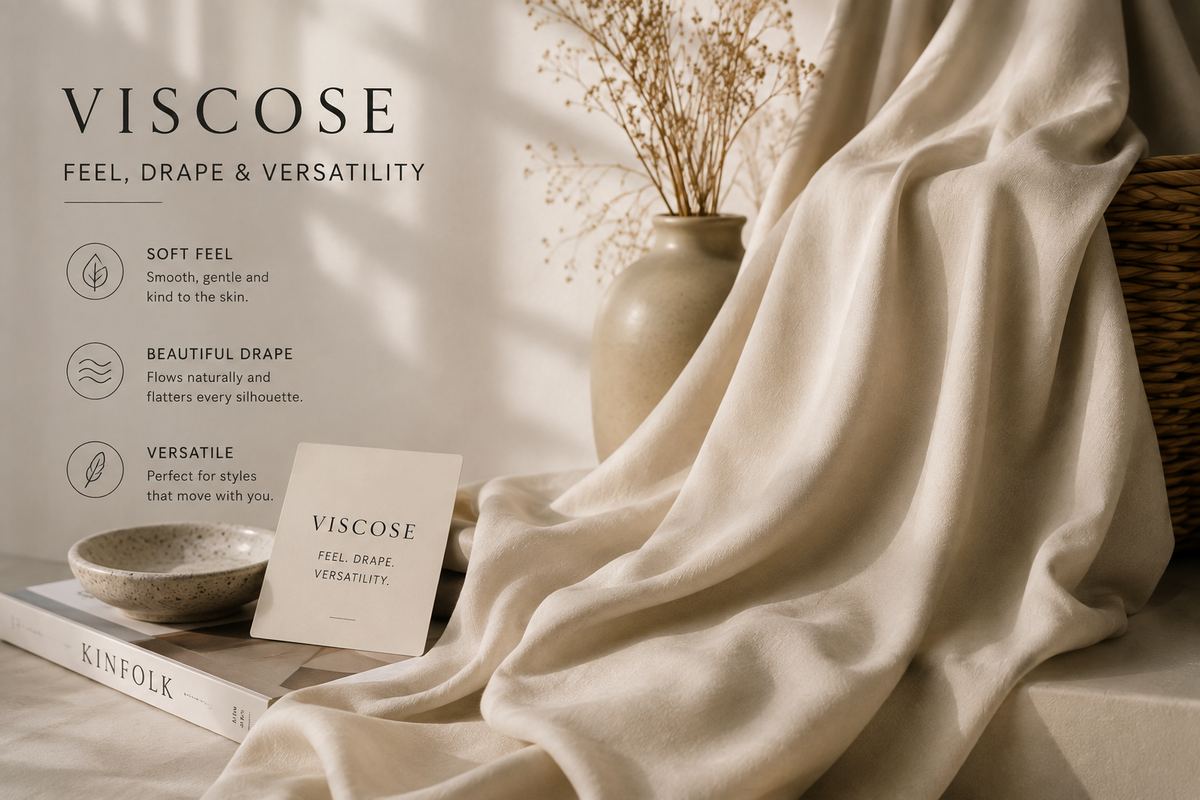
If you've ever touched a fabric that felt almost like silk but cost a lot less, there's a good chance it was viscose. It's one of the most popular fabrics we supply — and one of the most misunderstood. Here's what it actually is, in plain terms.
Where viscose comes from
Viscose starts as wood pulp — usually from fast-growing trees like eucalyptus. The pulp is chemically processed and spun into fine threads. So while it isn't a "natural" fiber in the way cotton is, it isn't fully synthetic either. It's often called a semi-synthetic fabric, and that's exactly why it behaves the way it does — the softness of a natural fiber, with some of the consistency of a man-made one.
Why it drapes so well
"Drape" simply means how a fabric falls and moves. Viscose has a fluid, almost liquid drape — it skims the body instead of sitting stiffly, which is why it's a favorite for anything meant to flow: dupattas, sarees, flared kurtas, and gowns. If you've ever seen a dupatta that seems to float rather than hang, it's very likely viscose.
Where we see it used most
- Santoon — light, breathable, commonly used as lining for lehengas, gowns and bottom wear.
- Muslin — sheer and soft, popular for dupattas and layering.
- German & Uppada finishes — add a bit more texture and structure while keeping that signature drape.
A few honest things to know
Viscose is breathable and comfortable in warm weather, and it takes dye beautifully — which is why we stock so much of it in RFD (Ready For Dyeing) form. The trade-off: it needs gentler washing than cotton, since it's weaker when wet. For most garment and dupatta uses, that's a small price for how good it looks and feels.
Looking for the right viscose weight or finish for your project? We'll help you find it.
Ask on WhatsApp